Monday, November 12, 2012

Yang: 【3】Effects of Resettlement


There is a delicate balance between humans and the natural systems in which they interact. Humans often change their natural environment in an attempt to "improve" it. For nearly a decade, citizens’ groups outside China had been fighting plans for building the Three Gorges Dam on the Yangtze River. Situated on a spectacular stretch of canyon known as the Three Gorges, this was to be the world’s largest hydroelectric dam. Dam builders – the governments, engineering industry, and international aid agencies – believed the Three Gorges Dam would do what no other dam on earth has been designed to do: protect millions of people living along the middle and lower reaches of the river from disastrous floods; generate up to 20,000 megawatts of hydroelectricity for China’s energy-hungry industrial centres; and transform a 600-kilometre stretch of the fast-flowing river into a smooth navigable waterway for ocean-going vessels. To do this would require forcibly relocating up to 1.4 million people, permanently sullying the legendary Three Gorges, drowning up to 632 square kilometers of precious farmland, and disrupting the world’s third-largest river – the lifeblood of China’s industrial and agricultural heartland. 
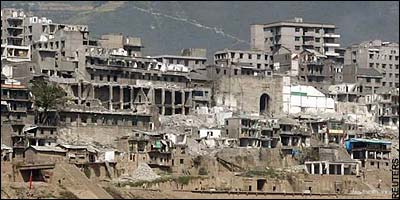


As the water level of the dam rose over 600 feet, entire villages, towns, and even cities were left completely underwater. Although the central government provided allocations for the involuntarily displaced residents, many had trouble in the transition from rural to urban life, many lost their livelihoods with their farmlands, and many suffered from psychological trauma as their ancestral homes of generations were lost. In addition to moving their belongings, many displaced people also want to move the graves of the deceased loved ones. After they leave, their houses are torn down to discourage people from moving back. During this relocation, the natives suffered a lot. The main difficulty of the relocation project is the lack of land availability. Relocation is not merely just the resettlement of homes but the farmlands that the lands people cultivated. The difficult objective was to find viable land for these farmers to grow their crops. Since China is already very densely populated, it is hard to find even an inch of land to cultivate any new farmlands. 


The prestige and the economic interests vested in the Three Gorges Project have a stark collateral. The project is based on the exploitation and the widespread abuse of the human rights of the more than one million people affected by it. Large communities displaced by the reservoir, earn as little as one third of the World Bank’s absolute poverty line of one dollar per day. It is these people – some of the poorest and most deprived citizens of China – who pay the price for implementing the $28 billion Three Gorges Project.


(VIDEO: Living With the Three Gorges Dam)According to an official count, more than 1.3 million people were displaced from their homes during the building of the world's largest dam. Now the "hidden dangers" of the project to those living around the dam are coming to light.


Reference:
"All About the Three Gorges Dam." Sherwood Institute
            <http://www.sherwoodinstitute.org/all-about-the-three-gorges-dam/>.
"ASIANOW - Asiaweek." ASIANOW - Asiaweek
            <http://www-cgi.cnn.com/ASIANOW/asiaweek/96/0719/ed2.html>.
"Chinese Dam Projects Criticized for Their Human Cost." International Rivers <http://www.internationalrivers.org/resources/chinese-dam-projects-criticized-for-their-human-cost-2978>.
"SPECIAL SERIES; China - Three Gorges Dam - Choking on Growth, Part IV." The New York Times. The New York Times, 19 Nov. 2007 <http://www.nytimes.com/interactive/2007/11/19/world/asia/choking_on_growth_4.html>.


Sunday, November 11, 2012

Yang: 【2】Possible affects


The Yangtze River in China is the third largest in the world. The Chinese call the river Chang Jiang, which means “Long River." With more than 30 industrial cities along the coast, this river provides about 70% of the inland water transportation. In addition to the industrial cities, the river runs through more than 25% of the agricultural farmlands and supports about a third of the population in the country, which has great economic, cultural, and political importance to China.
The controversial Three Gorges Project (TGP) had been proposed for three reasons: to produce more efficient hydroelectric power (power generation) for the country; flood control; waterway navigation purposes.
Although the great amount of hydroelectric power produced would benefit the country, there are many controversial issues about the TGP. By building a gigantic dam across the Yangtze River, it would create significant impacts on the river itself and affect the living people along the coast. With the TGP under way, there would be a submergence of the local coastal cities. About one million innocent civilians would be displaced to local inland urban cities. The integration of the two populations would cause an over crowding and social disruption to the local existing community. However, the main concerns of the TGP are the negative environmental impacts that the project would create.
However, the environmental effects outweigh the social impacts. The disruption of the environment and the ecosystem would alter the natural capital of China. These environmental drawbacks include: water pollution, fish migration, inundation, landslides, sedimentation, ground water contamination, soil erosion, water loss of the "great lakes" of China, ground water contamination of Shang Hai, eutrophication, and an outbreak of water borne disease.
On the other hand, as 19 countries would be affected by the TGP, this in turn would affect a total population of 14 million people. A possible worldwide impact, an "economic and social disaster" would have to be taken into consideration. However, within the general vicinity, resettlement of 727,000 people will have to take place due to the submerging of towns and urban centers. The relocation of the population would not only affect the people socially, but also economically in the end. In addition to the submerging of towns and urban centers, historical sites (dating back to 10,000 B.C.) will also be submerged. As for the economic concerns, China would be drastically affected by the agricultural shifts. Vital farmlands would be submerged and so will coal mines and metal mines worth millions of dollars. With a decrease in land availability due to the submergence, the lack of replenishment of land would affect the industry and the agriculture of the country.
An analysis of how these impacts would affect the society, environment, and the economic stability have to be taken into consideration. However, if no isolation of a single benefit from the TGP can be made, proposals would have to take place, which are about alternative roots to fulfill the demand for energy (hydroelectric power), flood control, and navigation within the water systems of China.
(NASA's animation of China's Three Gorges Dam construction over the years.)


Reference:
"All About the Three Gorges Dam." Sherwood Institute
            <http://www.sherwoodinstitute.org/all-about-the-three-gorges-dam/>.
"ASIANOW - Asiaweek." ASIANOW - Asiaweek
            <http://www-cgi.cnn.com/ASIANOW/asiaweek/96/0719/ed2.html>.
"Chinese Dam Projects Criticized for Their Human Cost." International Rivers <http://www.internationalrivers.org/resources/chinese-dam-projects-criticized-for-their-human-cost-2978>.

Friday, November 2, 2012

Yang: 【1】Basic Introduction to The Three Gorges Dam Project


The China Yangtze Three Gorges Dam Project, the largest water conservancy pivotal project in the world today, is located in the middle part of Xiling Gorge. This project can fully exploit the hydraulic resources in the Three Gorges of Yangtze River. It is beneficial in ten aspects, including flood control, power generation, navigation, aquaculture, tourism, ecological protection, environmental purification, developmental resettlement, transferring water form the South to the North, water supply and irrigation which makes it a unique super power station worldwide.


It consists of three major structures, including the dam, the powerhouses and the ship locks. The dam is 2309.47 meters (6,929 feet) long, with the crest at elevation 185 meters (555 feet). The normal pool level of the reservoir is EL 175 meters (525 feet) and the total storage capacity 39.3 billion cubic meters (1,061 billion cubic feet) of which 22.15 billion cubic meters (598.00 billion cubic feet) is for flood control. So the dam can effectively hold up the flood from the upper reach of the Yangtze River and improve the flood control capacity of the middle and lower reaches. The powerhouses have been equipped with 26 units of generators of 700,000 kw each, with a total capacity of 18.2 million kw and annual output of nearly 84.7 billion kwh.


The dam has been equipped with twin 5-flight ship locks, which can adequately handle tows up to 10,000 tons, and one-step vertical shiplifts, which can provide immediate service for any vessels under 3,000 tons.  The dam will elevate the water level of the upper reach of the Yangtze River of 80 metes (240 feet) in the flood season and 110 meters (330 feet) in the dry season. So it can improve the navigating route in Sichuan Province of 660 kilometers (375 miles) and increase the shipping capacity from 10 million tons to 50 million tons.


This photo taken on Sept. 14, 2012 shows the night scene of the Three Gorges Dam  which spans China's Yangtze River, to reduce water discharge with a full-capacity storage test. The reservoir, mainly built to tame the Yangtze River, usually discharges water in May. It alleviates spring droughts in areas downstream, and makes room to contain water from the river's seasonal flooding in summer. (photo: Zuyu Chen)


Reference:

Pic: http://www.albumstreet.com/hdstreet/1620/three-gorges-dam
http://www.lwdf.cn/wwwroot/dfzk/current/256971.shtml
Data: http://baike.baidu.com/view/26251.htm